
Miami City Phone Directory
The Miami phone directory connects residents and the public to one of South Florida's most active city governments. Miami sits within Miami-Dade County, and the city runs its own administration separate from the county government. The quickest way to reach any Miami city department is by dialing 311 from a local phone, or (305) 468-5900 from outside the area. This guide breaks down every key phone number, online search tool, and public records resource for the City of Miami. Under Chapter 119 of the Florida Statutes, all of this contact information is public and available to anyone who asks for it.
Miami Quick Facts
Miami Government Phone Directory Contacts
The City of Miami administration operates out of the Miami Riverside Center (MRC) at 444 SW 2nd Avenue, Miami, FL 33130. The main phone is (305) 468-5900, and local callers can just dial 311. The current City Manager is James Reyes. The City Clerk is Todd B. Hannon. The City Attorney is George Wysong. Mayor Eileen Higgins leads the city. Each of these offices has staff who take calls during business hours.
Miami publishes a Quick Contacts page on its website that lists phone numbers for every major department. This is the fastest way to find the right number without calling the main line first. The page covers police, fire, parks, code enforcement, solid waste, and more. You can also use the "Find My Commissioner" tool on the Miami website to look up which commissioner represents your area and get their direct office number.
The Miami Quick Contacts page lists direct phone numbers for all major city departments and officials.
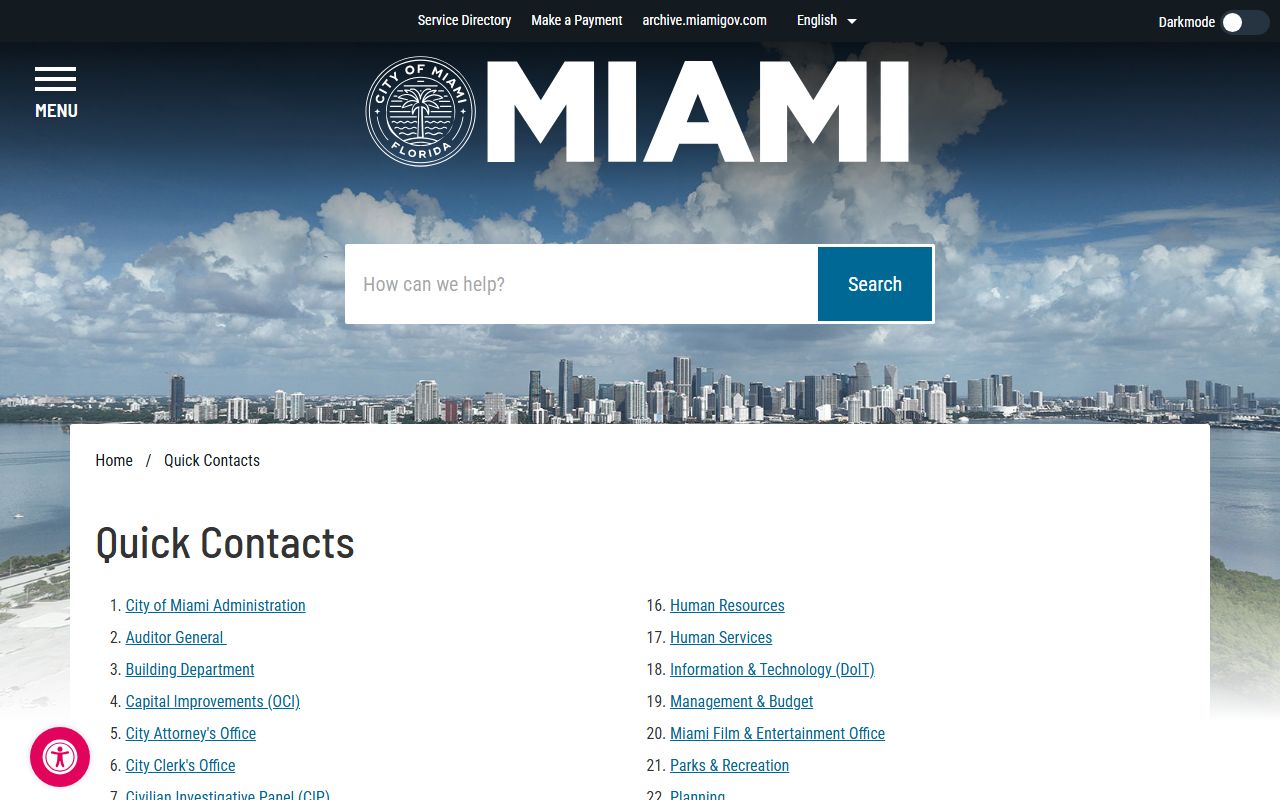
For a more detailed list that goes beyond the top-level offices, Miami keeps a full City Directory. This directory breaks down departments further and includes division-level contacts. If you need to reach a specific unit within public works or building and zoning, the City Directory is the place to look.
Miami City Directory and Department Listings
The Miami City Directory organizes every department and division into a searchable list. Each entry shows the office name, phone number, and location. Some entries include email addresses. This is not the same as an employee search. It lists departments and offices rather than individual staff members. But it is still one of the most useful tools in the Miami phone directory for finding the right contact.
The full City Directory on the Miami government website shows department-level phone numbers and locations.
Departments you can find in the directory include the Office of the City Manager, Finance, Human Resources, Parks and Recreation, Planning and Zoning, Police, Fire-Rescue, Solid Waste, Capital Improvements, and the Office of Grants Administration. Each one has its own phone number. For most residents, calling 311 is still the easiest path. But if you already know which department you need, going to the directory and calling that number directly saves time.
Note: The City Directory updates periodically, so confirm phone numbers on the live page if your call does not connect.
Miami Phone Directory for Public Records
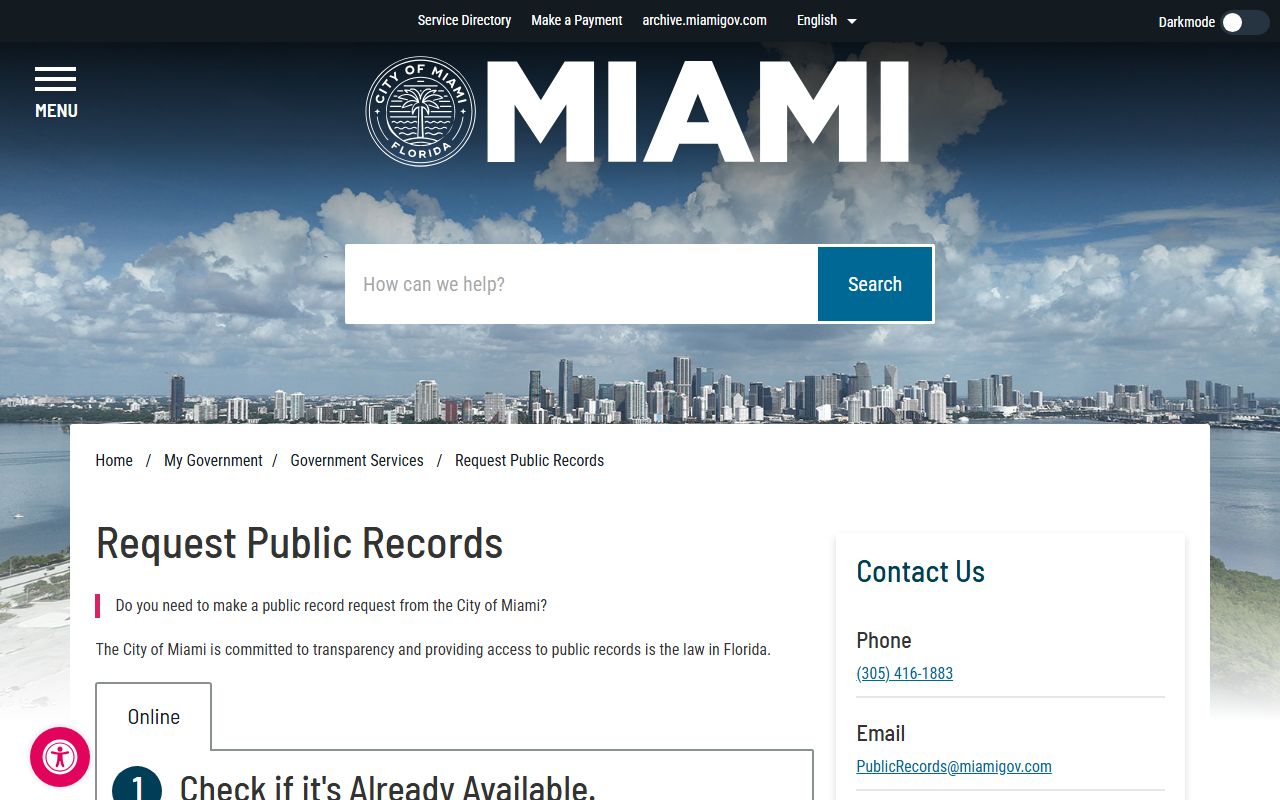
The City of Miami handles public records requests through an online portal and a dedicated phone line. The public records phone number is (305) 416-1883. You can also email PublicRecords@miamigov.com. The office is on the 9th floor of the Miami Riverside Center at 444 SW 2nd Avenue. The city emphasizes that it is committed to transparency and that providing access to public records is the law in Florida.
Miami uses a separate online system for submitting and tracking records requests. The Miami public records search portal lets you file a new request, check the status of a pending one, and view records that have already been released. The city recommends being as specific as possible when you submit a request. Include date ranges, key words, and the department name if you know it. This helps staff find what you need faster.
The Miami public records request page explains how to submit and track records requests under Florida law.
One useful feature of the Miami records portal is that all previous requests and their results are viewable online. Before you file a new request, you can search through what others have already asked for. You may find the document you need without having to wait for a new response. This saves time for both you and the city staff who process requests.
The Miami public records search portal on GovQA tracks requests and stores previously released documents.
Building records like plans and permits have a separate request process. The main public records page on the Miami website links to that process directly. If you need building plans, do not file a general records request. Use the specific link for building records instead. It will get to the right office faster.
Miami-Dade Clerk Official Records Search
For records at the county level, the Miami-Dade Clerk of Courts runs an official records search tool. This database holds deeds, mortgages, liens, marriage records, and other documents recorded with the clerk. You can search by name, document type, or date range. The tool is free for basic searches and does not need a login.
The Miami-Dade Clerk official records search provides access to recorded documents for all of Miami-Dade County.
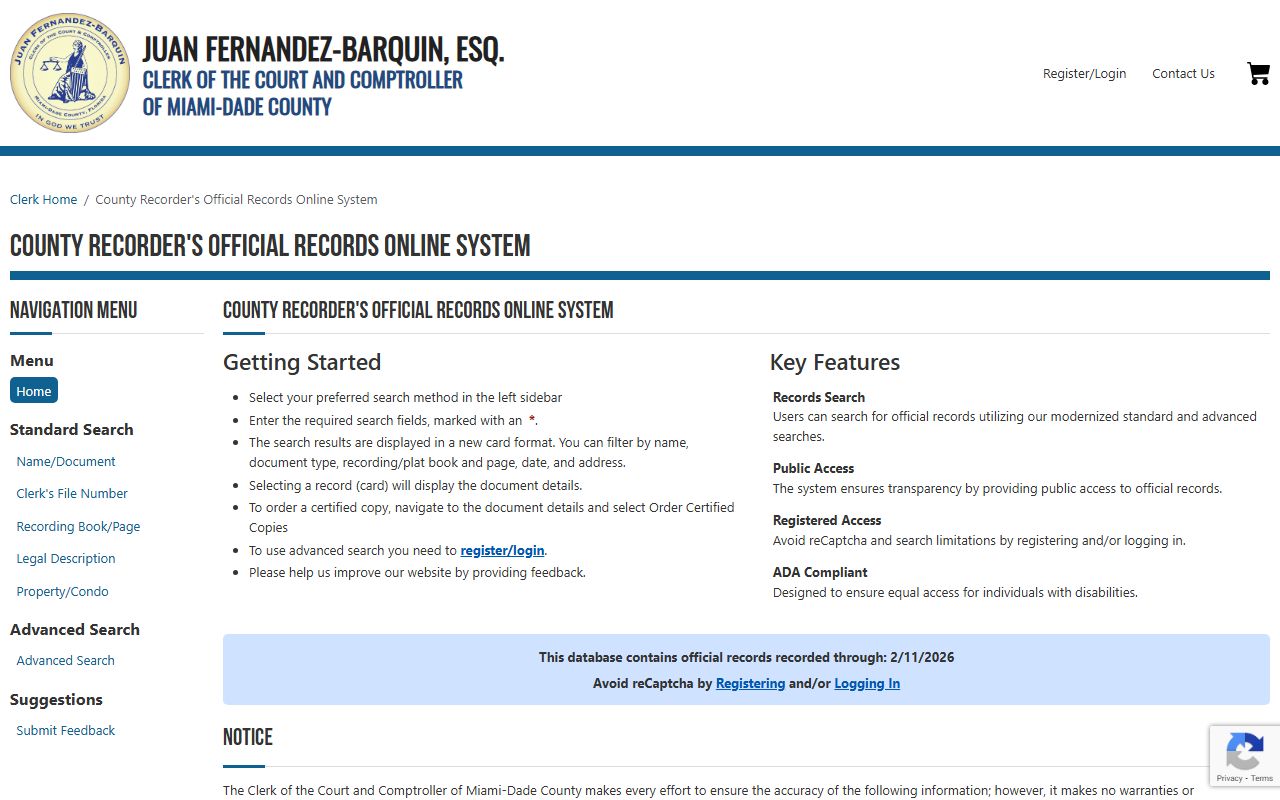
This is a county-level resource, not a city one. Miami is one of many cities within Miami-Dade County. The clerk's office serves all of them. If you are looking for a recorded document related to property in Miami, this is where you search. Court cases also go through the Miami-Dade Clerk, and you can look those up on the clerk's website as well. For more on county-level resources, see the Miami-Dade County phone directory page.
Watch Miami Government Meetings
Miami provides live and recorded video of city commission meetings and other public hearings. The Watch Live Meetings page on the city website streams meetings as they happen and keeps an archive of past sessions. This is useful if you want to hear a discussion on a topic without attending in person.
The Miami Watch Live Meetings page provides live and archived video of city commission meetings.
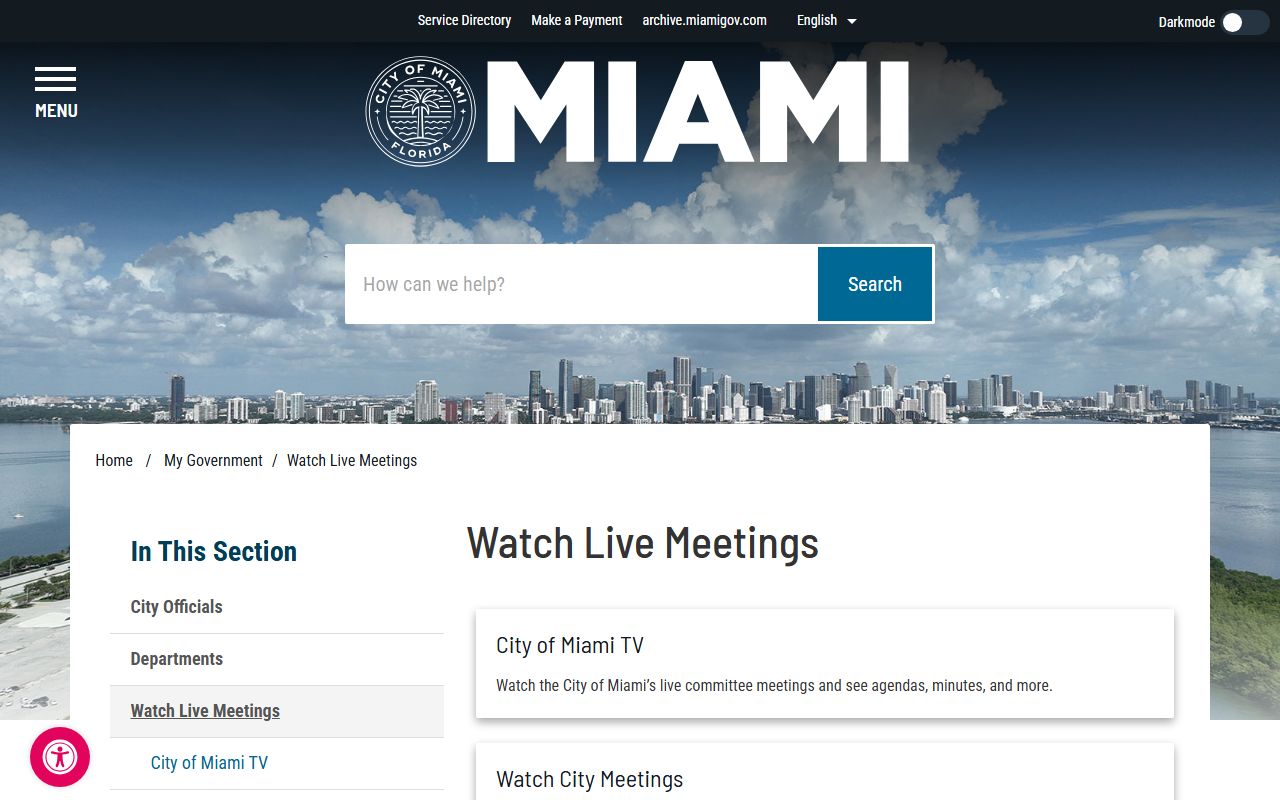
You do not need an account to watch. Meetings are public under Florida's Sunshine Law. The video archive lets you go back and find specific votes, presentations, or public comment periods. If you hear something in a meeting and need to follow up, the City Directory and Quick Contacts page give you the phone numbers to call the right office afterward.
Finding the Right Miami Phone Number
The simplest path is to call 311 if you are in Miami or (305) 468-5900 from elsewhere. That line routes you to the right place. For court records and official documents, contact the Miami-Dade Clerk of Courts rather than the city. For press and media, email Communications@miamigov.com. Here is a quick list of the most called numbers:
- City Services (local): 311
- City Services (non-local): (305) 468-5900
- Public Records: (305) 416-1883
- Public Records Email: PublicRecords@miamigov.com
- Miami Riverside Center: 444 SW 2nd Ave, Miami, FL 33130
Between the Quick Contacts page, the City Directory, and the 311 line, you can reach any office in the Miami city government. The phone directory resources on the Miami website are well maintained and updated regularly. For county-level contacts that cover the broader Miami area, visit the Miami-Dade County phone directory page on this site.
Nearby Florida Cities
Miami is surrounded by several other major cities in South Florida. Each of these has its own city government and phone directory with local contacts that differ from what Miami offers. You can explore their pages for city-specific phone numbers and resources.